War, money, and the most powerful form of peaceful resistance.
I'm writing this from a country that has been dragged into a war it didn't choose, squeezed between powers it has no influence over, paying a price it has no ability to refuse.
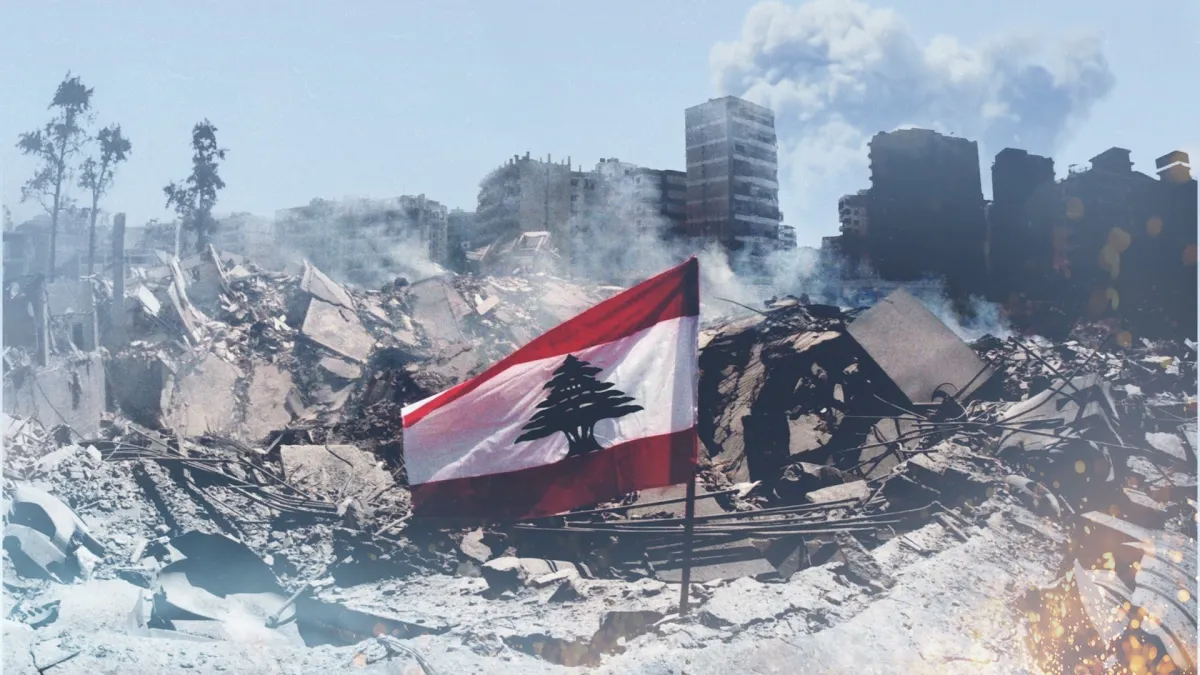
850+ people killed in two weeks. 800,000 displaced. That's one in seven Lebanese. Entire neighborhoods flattened. Children pulled from rubble that used to be their bedrooms.
Lebanon is a country wired to the US dollar. The Lebanese pound has been pegged to it for decades. Our banking system runs on it. Our savings are denominated in it. When that system collapsed in 2019, we learned what it means to depend on money you don't control. We lost everything - not in a market crash, but in a slow, deliberate confiscation by the banks that held our deposits hostage.
And now, the same currency that failed us is funding the missiles that are falling on our heads.
That thought won't leave me. And if you sit with it long enough, it starts to clarify everything.
How Wars Are Really Financed
There's a question that almost nobody asks: where does the money come from?
Not the geopolitical justification. Not the strategic rationale. The actual money. Where does a government find the resources to sustain a military campaign that costs a billion dollars a day, week after week, with no end in sight?
The answer is the same one it's been for over a century: they print it.
Before the 20th century, wars were constrained by a simple reality. Governments fought with the gold they had in their treasuries. When the gold ran out, the war ended. This created a natural limit on conflict. Kings who spent recklessly on war bankrupted themselves. Countries that chose peace accumulated wealth. The incentive structure rewarded restraint.
World War I changed everything. The major European powers - Germany, France, Austria-Hungary, Russia - all suspended gold convertibility in 1914, and Britain effectively restricted gold flows. For the first time, governments could finance war not with their own reserves, but with the purchasing power of every person using their currency. The limit on war expanded from the government's treasury to the entire wealth of the population.
The money printer had been weaponized.
And it never stopped. As Ron Paul put it: it's no coincidence that the century of total war was also the century of central banking.
In practical terms, this is what that means.
When a government prints money to fund a war, it doesn't send soldiers to your door to confiscate your savings. It doesn't need to. It simply creates new money, which dilutes the value of the money already in your pocket. You pay for the war through the slow erosion of your purchasing power. An invisible tax. No vote required. No consent asked.
Under a gold standard, if a king wanted to extend a war beyond his treasury, he had to resort to what's known as "forced levies or war requisition" - essentially sending armed men door-to-door to collect gold from citizens.
This added enormous logistical and political complexity. It made him deeply unpopular. And it amounted to a direct, visible tax on top of whatever taxes people were already paying. In a world where taxation was already resented, this was a recipe for revolt. It often started a second war at home. It was unsustainable.
Under fiat money, that complexity disappears entirely. The government doesn't need your cooperation, your awareness, or your consent. It prints currency. Your purchasing power erodes. And by the time you feel it in the price of bread or rent, the missiles already did their job.
This is the machinery. Money printing finances war. War justifies more money printing. The cycle continues until the currency collapses or the population revolts - whichever comes first.
The Numbers
Let's make this concrete.
The United States is currently spending an estimated $1 to $1.9 billion per day on Operation Epic Fury - the military campaign against Iran that began on February 28, 2026. The Pentagon briefed Congress that the first six days alone cost $11.3 billion. The Center for Strategic and International Studies calculated $3.7 billion in the first 100 hours - roughly $900 million per day.
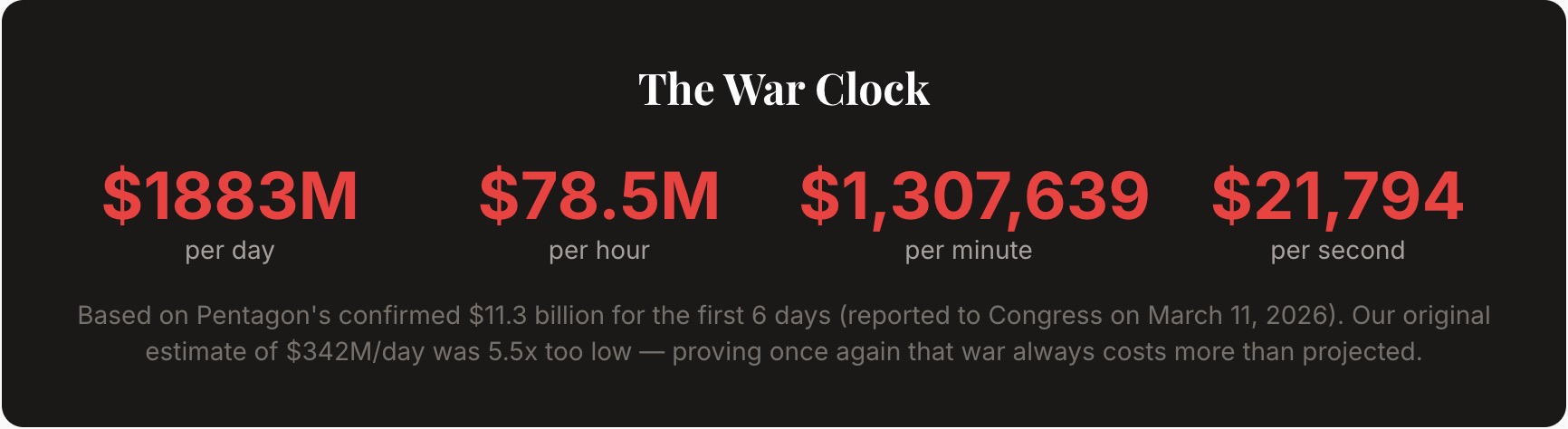
That's $21,800 per second. Every second you spend reading this sentence, another $21,800 goes toward missiles, interceptors, and bomber sorties.
Penn Wharton's Budget Model estimates a two-month war could cost between $40 and $95 billion. If the conflict extends to six months - the timeline Iran's Revolutionary Guard says it can sustain - the figure approaches $259 billion. And none of this was budgeted. $3.5 billion of the first $3.7 billion spent was entirely unbudgeted. Congress didn't authorize it. No supplemental spending bill was passed. The money appeared because in a fiat system, money can always appear.
Israel approved an additional $13 billion in defense spending to cover its share of the war, on top of a record $44.7 billion defense budget for 2026 - roughly 9% of its GDP.
Since October 7, 2023, the US has provided Israel with $21.7 billion in military aid. Add US operations in support of Israel in Yemen, Iran, and the broader Middle East, and the total reaches $31 to $34 billion. All from the same money printer.
The US dollar is the world's reserve currency - roughly 60% of all global foreign reserves are held in dollars, and trillions more circulate outside US borders. When the Federal Reserve creates new money, it dilutes the purchasing power of every dollar everywhere. That includes the dollars in my pocket here in Lebanon, the dollars held by central banks in Asia, and the dollar savings of families across the Middle East, Africa, and Latin America. When the US prints to fund a war, the entire world pays the inflation tax.
The fiat system has no hard limit on how much can be spent. Only the purchasing power of the currency draws a line - and that line moves in one direction.
Which brings us to the uncomfortable conclusion that connects all of this.
Every Transaction Is a Vote
Every time you use a government-issued currency, you participate in the system that funds this. You do it without choice, without awareness, but the structure doesn't care about your intentions. The purchasing power that leaks out of your savings doesn't evaporate. It gets redirected - toward government spending, military contracts, and wars you never consented to.
Every dollar you hold is a vote for the system that produces dollars. By holding them, by earning in them, by saving in them, you give that system your trust and your economic energy. That trust is what allows the dollar to maintain its status. That status is what allows the US government to print without immediate consequences. And that printing is what pays for the bombs.
Every time you use bitcoin, you cast a completely different vote:
You vote for the separation of money and state.
You vote for a money supply that no government can inflate to fund a war.
You vote for a system where your savings can't be silently confiscated to pay for missiles.
You vote for the idea that you own your money - not a central bank, not a treasury department, not a defense contractor.
You vote for a world where the cost of war must be borne transparently - through direct taxation, not hidden inflation.
You vote for a currency that doesn't care about borders, doesn't pick sides, and doesn't fund anyone's geopolitical ambitions.
You vote with the most honest ballot available: your economic energy.
Strip away the politics and what remains is mechanics. The mechanism through which modern war is financed is monetary expansion. The mechanism through which that financing is disrupted is a money supply that cannot expand.
Bitcoin has a fixed supply of 21 million. It cannot be inflated. It cannot be printed. It cannot be weaponized by any government because no government controls it. When you save in bitcoin, your purchasing power doesn't leak into a war budget. It stays with you.
The Moral Imperative
If you believe that the wars being fought in your name, with your money, without your consent, are wrong - then using money that is independent of any state is not just a financial decision.
It is a moral one.
This goes beyond protest signs and letters to your representative. Those are acts within the system. The system processes them, files them, and prints another billion dollars.
The real leverage is at the source: money itself.
Governments derive their power to wage war primarily from their control of the money supply. Cut that link, and you cut the most efficient funding mechanism for state violence that has ever existed.
As long as the government can print money and have that money accepted by its citizens, it can keep financing war. The moment that money is no longer accepted - or the moment a critical mass of people opt into a monetary system outside government control - the calculus changes.
The entire architecture of fiat money was designed around the ability to create money beyond what the government holds in reserves.
That ability is what funds war without direct taxation. That ability is what allows leaders to wage conflicts their citizens would never pay for voluntarily.
Ask yourself: if the US government had to fund this war through a direct, visible tax on every citizen's paycheck - not hidden through inflation but stated plainly on your pay stub - would this war still be happening? Would any of the post-2001 wars have lasted as long as they did?
The money printer is what allows the political class to convert ideas into violence at scale without accountability. It is the engine that turns policy disagreements into bombing campaigns, economic sanctions into collective punishment, and geopolitical posturing into civilian casualties.
Using money that cannot be censored, that cannot be subject to sanctions, that treats every participant equally regardless of which side of a conflict their country falls on - this isn't a fringe libertarian fantasy.
It's the minimum coherent response to a system that robs you to build weapons.
The Real Separation of Money and State
The phrase "separation of church and state" is understood by nearly everyone. The idea that religious institutions should not control government policy - and that government should not dictate religious practice - is considered foundational to modern democracy.
The separation of money and state is the same idea, applied to the most powerful tool any government has.
Control over money is the master key.
It unlocks everything else. With it, a government can fund wars, bail out banks, surveil transactions, freeze accounts, enforce sanctions, and redistribute wealth - all without legislative approval if it chooses. The money printer doesn't need a vote.
Bitcoin is the first technology that makes genuine separation of money and state possible at scale. The reason is architectural, not ideological. There is no company behind it. There is no central authority deciding how much to issue. There is no one who can be pressured, bribed, or overruled. Bitcoin runs on rules that were set in 2009 and enforced by tens of thousands of computers around the world. Those rules say: 21 million. Ever. That's it.
It was not issued by a government. It cannot be printed by one. A transaction, once confirmed, cannot be reversed by one. A balance cannot be frozen by one.
When enough people store their economic energy in a system like this, the dynamic shifts. The government can no longer silently tax the population through monetary expansion.
If it wants to spend, it must tax transparently.
If it wants to wage war, it must ask - openly, honestly, on the public ledger of democratic accountability.
That's a critical structural change.
It's quieter than a revolution and more lasting than an overthrow. A gradual transfer of monetary power from institutions that have abused it to individuals who bear the consequences.
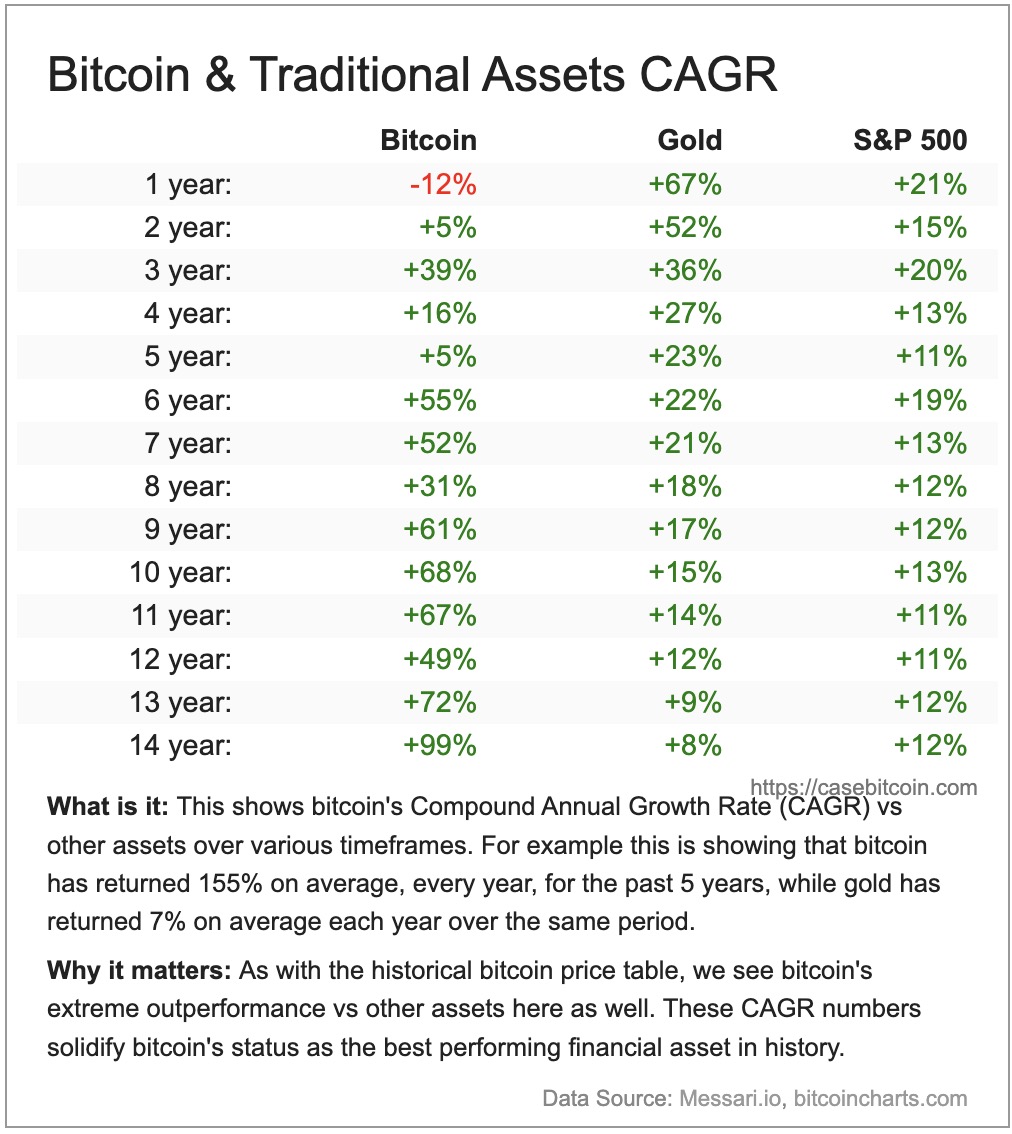
The less you depend on the dollar, the more sovereign you become. The more sovereign you become, the less leverage any external power has over your country. And the less leverage they have, the weaker the machinery becomes.
A Dose of Reality
I'm not naive about this.
Bitcoin is not going to end war tomorrow. It's not going to defund the military next quarter. For bitcoin to truly separate money from state, it would need to grow to a scale somewhere between gold's roughly $35 trillion market cap and the $100+ trillion in global monetary instruments. That's a long way from where we are.
I know that.
But every structural shift in history started with individual decisions that seemed insignificant at the time.
The printing press didn't overthrow the Catholic Church's monopoly on knowledge the year Gutenberg built his first one. It took decades of individual acts - a printer here, a reader there, a book passed hand to hand - before the cumulative effect became unstoppable.
By the time the establishment understood what was happening, the world had already changed.
Bitcoin is the printing press for money. And every satoshi (a fraction of a bitcoin - the smallest unit) you save is a page in that story.
If every person who read this article converted even a small portion of their savings into bitcoin - as a conscious act of opting out, rather than a speculative bet - the aggregate effect would be enormous. Not because any single action changes the system, but because the system changes when enough individuals make the same choice independently.
Beyond the moral argument: bitcoin has been the best-performing asset of the last 15 years. Its 4-year compound annual growth rate has consistently outperformed stocks, bonds, gold, and real estate. Over the past decade, its average annual return has exceeded 50%. Even measured conservatively from cycle to cycle, it has appreciated more than any other asset class in human history.
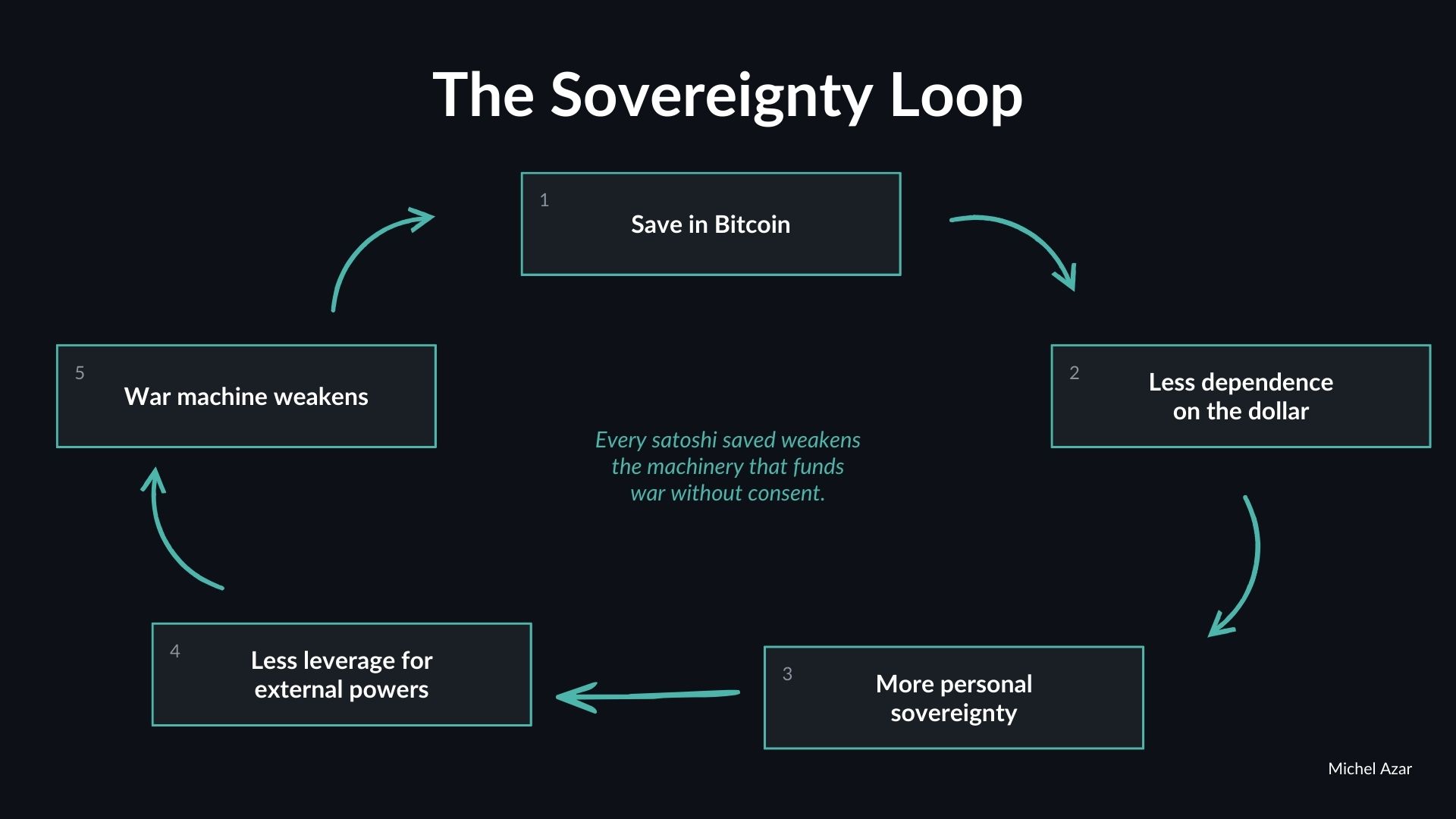
That means saving in bitcoin isn't sacrifice.
For the first time since the gold standard era, ordinary people have access to money that does what money is supposed to do: hold its value and actually appreciate over time. You don't need to become a stock picker. You don't need a financial advisor. You don't need to gamble on markets you don't understand. You just need to save - in money that can't be debased.
That is what deflationary money means in simple terms: your purchasing power grows over time instead of shrinking. The coffee you can buy with your savings this year? You could buy more coffee with the same savings next year. Not because coffee got cheaper, but because your money got stronger.
This is how money should work. This is how it worked for most of human history when gold was money. And this is what the fiat system took away from you.
Bitcoin gives it back.
And there's one more dimension to this that matters profoundly, especially if you live where I live: portability.
You can carry your entire net worth across any border on Earth with nothing but 12 words in your head. No bank. No wire transfer. No customs declaration. No government approval. Your money is not tied to a geography, a banking system, or a regime. If you need to flee - and I have watched people need to flee - you can take everything with you.
A hardware wallet the size of a USB stick. A phone with a Bitcoin wallet. Or nothing at all - just the seed phrase you've written down and memorized. You can cross any border, arrive in any country, and access your full economic life with an internet connection.
No gold bar fits in your pocket and clears customs. No bank account survives a banking collapse. No government-issued currency holds its value when the government issuing it is at war.
Bitcoin survives all of those scenarios.
Peaceful Resistance
What I've described is the opposite of a call to arms.
Bitcoin is the most powerful form of peaceful resistance available to any individual on Earth. You don't need to march, petition, or ask anyone's permission. You don't need to risk anything beyond the effort of learning how it works.
You simply choose to save your money in a system that no state controls. And in doing so, you sever - one satoshi at a time - the link between your economic energy and the machinery that converts it into violence.
Every satoshi saved is a small act of sovereignty. Every person who opts out of the inflationary system weakens - by that much - the ability of any government to wage war without consent.
It is peaceful. It is legal. It is individual. And it is, in my view, the most meaningful thing a single human being can do to resist a system that funds destruction with their stolen purchasing power.
Because sovereignty is not something a government grants you. It's something you build for yourself. And at the foundation of every kind of sovereignty - freedom of movement, freedom of speech, freedom of association - sits one thing without which none of the others hold.
Monetary sovereignty.
If you control your money, you control your future.
If someone else controls your money, they control yours.
I've lived in a country where the banks locked the doors and kept the money. I've lived through a currency that lost 98% of its value. I'm living through a war funded by a currency I had little choice but to use.
Every satoshi I save is a vote for something different. I hope that made you think.
Sources: CSIS - "Iran War Cost Estimate Update: $11.3 Billion at Day 6" (March 2026) - Al Jazeera - "How much could the Iran war cost the US?" (March 2026) - Penn Wharton Budget Model - Bloomberg - "Israel Plans $13 Billion Defense Budget Increase" (March 2026) - Saifedean Ammous - The Bitcoin Standard (2018) - Saifedean Ammous - The Fiat Standard (2021) - Federal Reserve Bank of St. Louis - "The International Gold Standard and U.S. Monetary Policy from World War I"